
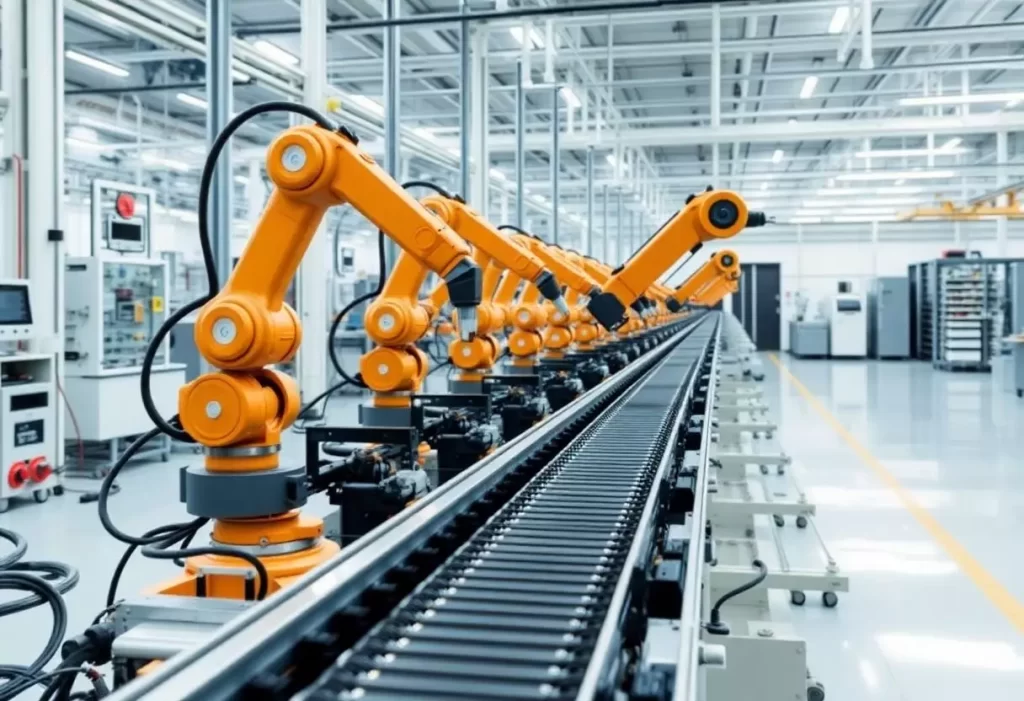
A leading Australian food manufacturer has reported a 50% boost in production efficiency following a strategic automation overhaul — a milestone that highlights the transformative potential of smart manufacturing in the food sector.
The company began by identifying inefficiencies in its production line, including repetitive manual tasks and inconsistent workflows. Through targeted investment in automated machinery, sensor-driven quality control, and AI-powered production scheduling, the business restructured its entire process from end to end.
Rather than simply replacing human labor, the manufacturer adopted a hybrid model, where machines handle high-volume tasks and skilled employees manage, monitor, and optimize system performance. Staff were retrained to work with the new technologies, ensuring a smooth transition and enhancing workforce capabilities.
The results were impressive: not only was output nearly doubled, but product consistency and safety compliance also improved. Real-time analytics now provide insights into equipment performance and supply chain timing, reducing downtime and waste.
This case serves as a benchmark for food manufacturers looking to modernize while remaining cost-effective and compliant with new industry standards. By focusing on both automation and process design, this company has demonstrated how the right strategy can lead to long-term operational resilience and competitiveness.